
Private Dentist Oral Health Assessment: What to Expect During a Comprehensive Dental Examination
07 August 2026
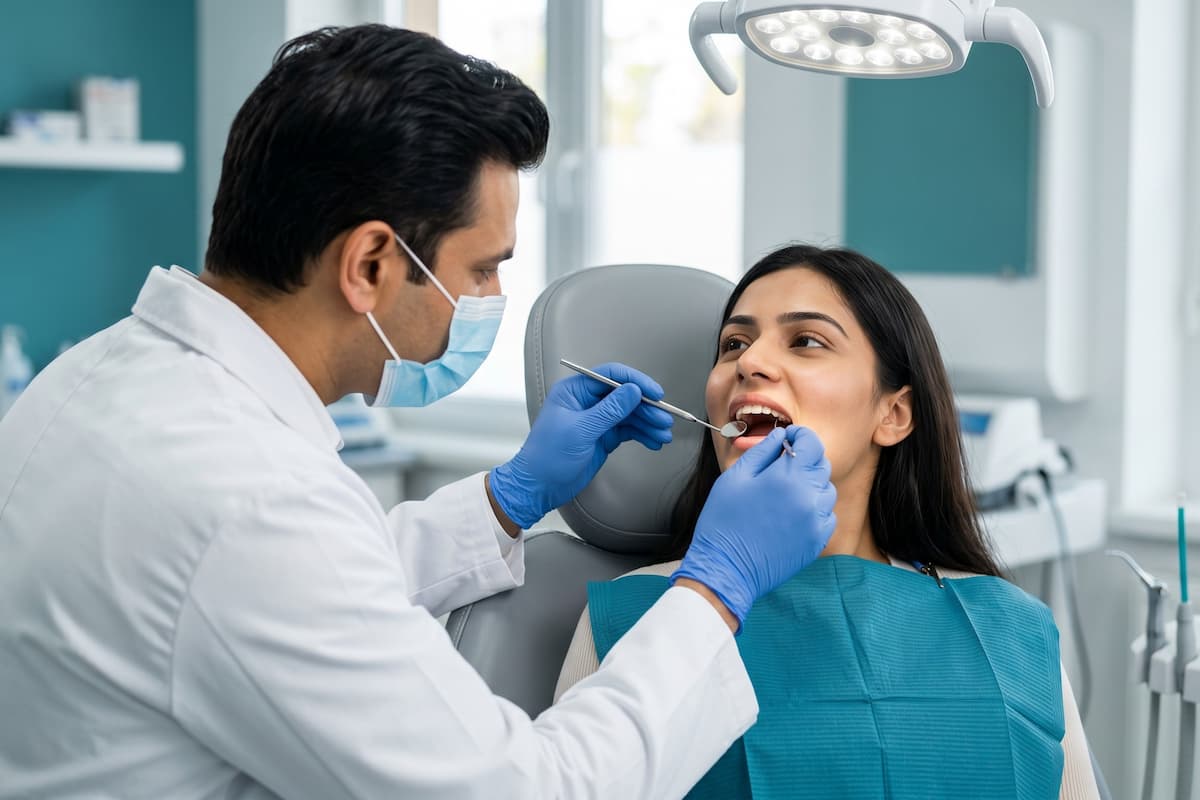
Many people feel uncertain about what to expect when they sit in the dental chair — particularly if they have not attended a private practice before, or if it has been some time since their last visit. A private dentist oral health assessment is not simply a check for holes in your teeth. It is a structured, clinical process designed to give you and your dentist a clear, personalised picture of your oral health today and how best to protect it in the years ahead.
Understanding what a comprehensive examination involves can help reduce any understandable anxiety, support better conversations with your dental team, and help you make informed decisions about your own care.
What Is a Private Dentist Oral Health Assessment?
A private dentist oral health assessment is a thorough, systematic examination of your entire oral environment — not simply the visible surfaces of your teeth. In a single appointment, your dentist will evaluate the health of your gums, the condition of any existing restorations, the alignment of your bite, the health of your soft tissues, and your individual risk factors for conditions such as tooth decay, gum disease, and oral cancer.
Key points at a glance:
- Covers teeth, gums, soft tissues, bite, and jaw
- Reviews your medical history and how it may affect your oral health
- Identifies early signs of problems before symptoms develop
- Results in a personalised preventive and treatment plan
A comprehensive dental assessment differs from a brief symptomatic consultation. Rather than addressing a single concern in isolation, it examines your oral health as a whole — recognising that problems in one area can often influence others. For example, gum disease can affect bite stability, and certain systemic health conditions can have direct implications for oral tissue health. This holistic approach is central to modern preventive dentistry, as supported by NICE guidance on oral health promotion.
For patients new to a private practice, or those returning after a gap in care, this type of assessment provides a thorough clinical baseline from which all future monitoring and decision-making can begin.
Why Is a Comprehensive Oral Health Assessment Important?
A comprehensive oral health review matters because many significant dental conditions develop slowly and silently — producing no noticeable discomfort until they have already progressed. Early identification, before symptoms arise, typically means simpler, less invasive, and more cost-effective management.
Key points at a glance:
- Many dental conditions cause no pain in their early stages
- Early identification supports less complex treatment options
- Preventive assessment reduces long-term dental costs
- Personalised risk identification supports tailored home care guidance
Tooth decay, for instance, begins at a microscopic level within the enamel. By the time it becomes painful, the damage may already extend into the dentine or pulp. Similarly, early-stage gum disease (gingivitis) is reversible with appropriate intervention, yet it can progress to periodontitis — affecting the bone that supports your teeth — if left undetected. The GDC's standards for the dental team emphasise that patient-centred care must include meaningful assessment, clear communication, and genuinely informed consent. A thorough examination supports every one of those principles.
How Private Dentists Examine Oral Health
A private dentist examines oral health through a structured, sequential process that moves systematically from your medical and dental background through to every clinical area of the mouth. Each stage informs the next, building a complete clinical picture rather than a series of isolated observations.
Key points at a glance:
- Examination follows a logical clinical sequence
- Medical history directly informs the oral assessment
- Each area assessed serves a specific diagnostic purpose
- The process is thorough but designed to be comfortable
Reviewing Medical and Dental History
Before any clinical examination begins, your dentist will ask about your general health, current medications, known allergies, and any changes since your last visit. This step is clinically important — not administrative formality.
Certain medications affect saliva flow, which in turn influences your risk of tooth decay. Conditions such as diabetes, osteoporosis, and autoimmune disorders have established links to oral health. Pregnancy, hormonal changes, and recent illnesses can all affect the health of your gum tissues. By reviewing this information carefully, your dentist can contextualise everything they observe during the clinical examination and provide genuinely personalised guidance.
Your dental history — including previous treatments, any anxieties, and your current home care routine — is equally valuable. It helps your dentist understand your individual oral health journey and identify any patterns worth monitoring.
Assessing Teeth and Existing Restorations
Your dentist will examine each tooth individually, assessing the enamel surfaces for signs of early decay, erosion, wear, and cracking. Existing restorations such as fillings, crowns, veneers, and bridges will also be evaluated for integrity, fit, and any signs of deterioration.
Detecting tooth wear early is particularly valuable, as the causes — whether dietary acid, tooth grinding (bruxism), or abrasion from brushing technique — each require different preventive strategies. A restoration that is beginning to break down around its margins may allow bacteria to re-enter, making timely identification important. Where dental implants are present, their condition and the health of the surrounding tissue will be assessed as part of this process. You can explore dental implant treatment and aftercare in London for further information.
Evaluating Gum Health
Gum health is assessed through a process called periodontal charting — a systematic measurement of the space between each tooth and the gum tissue surrounding it, known as the periodontal pocket. Healthy pockets are typically shallow; deeper measurements may indicate gum disease, which warrants further evaluation.
Your dentist will also examine the appearance of the gum tissue — noting colour, contour, texture, and any signs of bleeding on gentle probing. Bleeding gums are often an early indicator of inflammation and should not be dismissed as normal. Identifying gum disease at the gingivitis stage, when the supporting bone is still intact, allows for effective management through professional cleaning and improved home care. If you are concerned about your gum health, the periodontal treatment information for London patients may be helpful further reading.
Checking Bite and Jaw Function
Your bite — the way your upper and lower teeth meet — affects how forces are distributed across your teeth and jaw joints. Imbalances in the bite can contribute to tooth wear, chipping, jaw discomfort, and headaches over time.
Your dentist will assess how your teeth come together, looking for uneven contact points, signs of excessive wear patterns, and any evidence of grinding or clenching (bruxism). The temporomandibular joint (TMJ) and the muscles of the jaw may also be briefly assessed. If you experience jaw clicking, facial pain, or difficulty opening your mouth comfortably, mentioning this during your history review will ensure these areas receive appropriate attention.
Oral Cancer Screening
A systematic oral cancer screening is a routine and important component of a thorough dental examination. It involves a careful visual and tactile examination of all soft tissue surfaces in and around the mouth — including the lips, tongue, floor of the mouth, cheeks, palate, and throat.
Your dentist is looking for any unusual changes to tissue colour, texture, or surface that may warrant further investigation. Most findings will have an entirely benign explanation, but identifying any changes early is clinically important. Oral cancer has significantly better outcomes when detected at an early stage, as highlighted by NHS guidance. This screening takes only a few minutes and is a straightforward, non-invasive component of the assessment.
Understanding the Comprehensive Dental Exam Process
The comprehensive dental exam process follows an evidence-based sequence, ensuring that no area of the oral environment is overlooked and that clinical findings are interpreted in context. Each stage builds on the one before, allowing your dentist to reach accurate, well-reasoned conclusions.
Key points at a glance:
- The process moves from visual to clinical to diagnostic investigation
- Digital technology supports but does not replace clinical judgement
- Periodontal and occlusal assessments require specific tools and techniques
- Investigation choices are guided by clinical findings and individual risk
Visual Clinical Examination
The visual examination forms the foundation of every oral health assessment. Using a dental mirror, a clinical light, and a dental probe, your dentist will systematically inspect every accessible surface of your teeth and surrounding tissues.
This stage allows for the identification of visible decay, surface staining, gum recession, swelling, ulceration, and tissue changes. It also provides the context for deciding whether additional investigations — such as radiographs or more detailed periodontal charting — are indicated. Clinical examination skill remains central to dental diagnosis; technology enhances it rather than replacing it.
Digital X-rays and Imaging
Where clinically indicated, digital radiographs provide information that is simply not visible to the naked eye. Bitewing X-rays, for example, allow dentists to detect decay forming between the teeth, assess bone levels around the roots, and evaluate the condition of restorations beneath the surface.
Digital radiography uses significantly lower radiation doses than traditional film X-rays, in line with current IRMER (Ionising Radiation (Medical Exposure) Regulations) guidance, and images are available for review immediately. Periapical radiographs focus on specific teeth from root tip to crown, useful when investigating potential infection or evaluating dental implant health. Decisions about which views are needed — and how frequently — are made on clinical grounds and in line with your individual risk profile. Not every examination will require X-rays.
For complex cases involving bone structure, implant planning, or significant jaw concerns, cone beam computed tomography (CBCT) may occasionally be recommended, providing a three-dimensional view that conventional radiographs cannot offer.
Periodontal Assessment
A dedicated periodontal assessment uses a calibrated probe to measure pocket depths around each tooth. This process, known as a Basic Periodontal Examination (BPE) or full periodontal chart depending on clinical need, provides a detailed map of gum health across the entire mouth.
Findings guide decisions about the type of professional cleaning required, whether specialist periodontal referral is appropriate, and how frequently monitoring appointments should be scheduled. This data also serves as a baseline for future comparison — making it possible to track whether gum health is improving, stable, or changing over time.
Occlusion Assessment
A dedicated occlusal assessment examines how the teeth come together during different jaw movements — not just in a simple biting position, but also during lateral and protrusive movements. This is particularly relevant where tooth wear is present, where a patient reports jaw symptoms, or where significant restorative work is being planned.
Your dentist may use articulating paper — thin, coloured material placed between the teeth — to reveal the precise contact points during different movements. Understanding occlusion is essential both for accurate diagnosis and for planning any restorative or preventive interventions appropriately.
Private Dental Check-up Procedures Explained
A private dental check-up is typically more time-extended than an NHS routine examination, allowing for a more thorough assessment and a more in-depth conversation about findings and recommendations.
Key points at a glance:
- Appointments are generally longer than NHS routine visits
- Time allows for comprehensive assessment and patient discussion
- Findings are explained clearly and questions are welcomed
- The patient is an active participant in their care planning
In private practice, the appointment structure supports a consultation model — meaning there is dedicated time for your dentist to explain findings, answer your questions, and discuss options with you before any decisions are made. This aligns with GDC requirements for genuinely informed consent: a process that goes well beyond simply signing a form, and involves meaningful communication, honest information, and respect for patient autonomy.
Private check-up appointments typically last between 30 and 60 minutes, depending on clinical complexity and whether investigations such as radiographs are being taken. You will not be expected to make any immediate decisions during the appointment. A written treatment plan, outlining findings, recommended options, and indicative costs, will generally be provided for you to consider at your own pace.
Diagnosing Dental Problems in Private Practice
Diagnosis in a private dental assessment goes beyond confirming obvious problems. The clinical examination, history, and investigations combine to identify conditions at their earliest detectable stage — including those that have not yet caused any discomfort.
Key points at a glance:
- Multiple diagnostic tools work together to form accurate conclusions
- Early diagnosis offers the widest range of management options
- Many conditions are identified before they cause symptoms
- Clinical reasoning underpins every diagnostic conclusion
Early Tooth Decay
Decay detected at an early enamel stage — before it has progressed into the dentine — may be manageable without a conventional filling. Preventive approaches such as fluoride application, dietary advice, and improved oral hygiene may be sufficient to arrest the lesion. This is sometimes referred to as remineralisation management, and it represents one of the most significant clinical advantages of early detection. You can read more about preventive planning in this guide on how modern dental practices support long-term oral health.
Gum Disease
Gum disease is the most common cause of tooth loss in adults in the UK. Yet in its early stages, it is frequently painless and may only be identified through careful clinical examination. Distinguishing between gingivitis — inflammation of the gum tissue alone, which is reversible — and periodontitis — involving loss of the bone that supports teeth, which requires careful management — is an important diagnostic distinction that shapes the entire treatment approach.
Tooth Wear
Tooth wear has multiple causes, and identifying the correct mechanism is essential for effective prevention. Erosion — caused by dietary or gastric acid — produces different wear patterns to attrition (tooth-to-tooth contact from grinding) or abrasion (mechanical wear from toothbrushing technique or habits). Each requires a tailored preventive response rather than a one-size-fits-all solution.
Cracked Teeth
Cracked tooth syndrome can be challenging to diagnose because cracks are not always visible radiographically. Symptoms such as sharp pain on biting or sensitivity to cold may prompt specific clinical tests to localise the crack and assess its severity. The depth and direction of a crack will determine whether the tooth can be restored, and how.
Failing Restorations and Implant Assessment
Older fillings, crowns, or bridges may develop secondary decay, fractures, or marginal breakdown over time. Identifying restoration failures early prevents the need for more extensive treatment. Where dental implants are present, the health of the surrounding bone and soft tissue is monitored as part of the assessment. Any concerns about implant health would be explored further as part of your personalised treatment planning.
How a Personalised Oral Health Assessment Supports Preventive Dentistry
A personalised oral health assessment forms the clinical foundation of a genuinely preventive approach — because effective prevention must be based on an accurate understanding of an individual's specific risk factors, not a generalised assumption that everyone carries the same risks.
Key points at a glance:
- Risk assessment is individualised, not generic
- Preventive recommendations are tailored to your specific findings
- Diet, lifestyle, and systemic health all inform preventive advice
- Monitoring intervals are based on individual risk level
Your risk of developing tooth decay, for instance, is influenced by your diet, the composition of your saliva, your fluoride exposure, the presence of xerostomia (dry mouth), and your oral hygiene habits — all of which can vary significantly between individuals. Similarly, your risk of gum disease is influenced by factors including smoking status, blood sugar control, stress levels, and genetic predisposition.
By understanding these factors, your dental team can provide genuinely targeted guidance — from specific home care product recommendations and dietary advice to tailored recall intervals (the time between check-up appointments). NICE guidance on dental recall (CG19) supports risk-stratified recall intervals: patients with lower risk may be seen less frequently, whilst those with higher risk benefit from more frequent monitoring. This is a more clinically responsive approach than a fixed six-month recall for everyone.
What Happens After the Assessment?
Following a comprehensive oral health assessment, your dentist will bring together all clinical findings to discuss a clear, prioritised picture of your oral health — including any areas of concern, any conditions that warrant monitoring, and any treatment or preventive options worth considering.
Key points at a glance:
- Findings are clearly explained in non-clinical language
- A written treatment plan is typically provided
- Treatment priorities and options are discussed collaboratively
- Ongoing monitoring and recall scheduling is personalised
Where treatment is recommended, your dentist will explain the reason for each recommendation, the options available, the implications of proceeding or deferring, and the associated costs — giving you the information you need to make a genuinely informed decision. There is no expectation that you will make immediate choices.
Preventive advice — including guidance on toothbrushing technique, interdental cleaning, diet, and any relevant lifestyle factors — will be tailored specifically to your clinical findings rather than delivered as generic instruction.
Maintenance scheduling will be discussed with your individual risk profile in mind. Some patients may be best served by more frequent short appointments focused on monitoring and professional cleaning; others may be appropriate for annual or longer review cycles. This decision is made collaboratively, based on clinical evidence.
When Should You Arrange a Comprehensive Dental Assessment?
A comprehensive oral health evaluation is appropriate for anyone who has not had a structured dental assessment recently, is new to a private dental practice, has noticed any changes in their oral health, or simply wishes to understand their oral health status in detail.
Key points at a glance:
- Ideal for patients new to private practice or returning after a gap
- Appropriate when oral changes have been noticed
- Valuable as a proactive preventive measure
- No symptoms are required to benefit from an assessment
If you experience any of the following symptoms, you should arrange an appointment promptly rather than waiting for a routine review: persistent toothache, visible swelling in the gum or face, ulcers that have not healed within two to three weeks, or sensitivity that is worsening over time. These symptoms warrant clinical evaluation without delay.
Important medical safety information: If you experience rapidly spreading facial or neck swelling, difficulty swallowing, difficulty breathing, trismus (inability to open your mouth), or a high fever alongside dental pain, these may indicate a spreading dental infection requiring urgent medical attention. Contact NHS 111 immediately or attend your nearest Accident & Emergency (A&E) department. Do not wait for a routine dental appointment in these circumstances.
For those without acute symptoms, the question is not whether an assessment would be beneficial — it is simply when to arrange one. To explore what is included as part of a comprehensive private assessment, you may find the private dentist information page for London a helpful starting point.
Comparison Table: Routine Check vs Comprehensive Private Assessment
| Assessment Area | Routine Check | Comprehensive Private Assessment |
|---|---|---|
| Medical and dental history review | Brief update | Detailed review including systemic health, medications, and lifestyle factors |
| Gum assessment | Basic visual inspection | Full BPE or detailed periodontal charting with pocket depth measurements |
| Bite analysis | Not always included | Systematic occlusal assessment across multiple jaw movements |
| Oral cancer screening | Variable | Routine, systematic visual and tactile screening at every assessment |
| Digital imaging | Symptom-led or periodic | Risk-stratified — taken when clinically indicated for each individual |
| Preventive planning | General advice | Personalised to individual risk factors, lifestyle, and clinical findings |
| Personalised recommendations | Standard guidance | Tailored to specific clinical findings, risk profile, and patient goals |
| Appointment duration | Typically 10–20 minutes | Typically 30–60 minutes |
| Recall interval | Often fixed | Risk-stratified and individually determined |
Frequently Asked Questions
How long does a comprehensive private dental assessment usually take?
Most comprehensive oral health assessments in private practice take between 30 and 60 minutes. The duration depends on clinical complexity, whether radiographs are being taken, and how much discussion is needed following the examination. Your practice will give you an indication when booking, but it is worth allowing a little extra time at your first visit.Is a comprehensive dental examination painful?
A thorough dental examination is designed to be comfortable. The clinical instruments used — a mirror, a probe, and a light — are gentle, and the periodontal assessment involves only light pressure. Some patients with sensitive gums may notice mild discomfort during pocket depth charting, but this is typically brief. If you have dental anxiety, letting your dentist know before the appointment allows them to adapt their approach to put you at ease.How is a private oral health assessment different from what I receive on the NHS?
Both NHS and private examinations aim to identify and address oral health concerns. In private practice, appointments are typically longer, allowing for a more detailed clinical assessment, more time for discussion, and more individually tailored preventive planning. NICE guidance on recall intervals supports a risk-stratified approach to check-up frequency, which private practice is generally better structured to deliver. Neither setting is universally superior; the most appropriate choice depends on your individual circumstances and needs.Will I always need X-rays at a comprehensive assessment?
Not necessarily. Decisions about radiographic investigation are made on clinical grounds, guided by your individual risk factors and clinical findings. Taking radiographs without a clinical justification is not in line with IRMER regulations. If X-rays are recommended, your dentist will explain why they are clinically indicated in your case.I haven't been to the dentist for several years — what should I expect at a first assessment?
Returning to dental care after a gap is very common, and a thorough assessment provides an excellent starting point. Your dentist will take a full history, carry out a complete clinical examination, and may recommend radiographs to establish a comprehensive baseline. Findings will be explained clearly, and any treatment recommendations will be prioritised collaboratively — there is no expectation that everything needs to be addressed immediately.How often should I have a comprehensive oral health review?
The frequency of dental reviews should be determined by your individual oral health risk profile, rather than a fixed interval applied to everyone. NICE guidance (CG19) supports intervals ranging from three months to two years depending on clinical risk. Your dentist will recommend an appropriate recall interval based on your specific findings and risk factors.Can a comprehensive dental assessment help with dental anxiety?
A thorough assessment can contribute meaningfully to reducing long-term dental anxiety, because it removes uncertainty. Understanding the current state of your oral health — rather than worrying about what might be found — allows for a more manageable and predictable care experience going forward. If anxiety is a significant concern for you, it is worth mentioning this when you book, so the team can provide appropriate support from the outset. You may also find this article on patient-centred dentistry and personalised care helpful.Will my records and clinical findings be kept for future reference?
Yes. Accurate clinical records — including examination findings, radiographs, and charting data — are maintained in accordance with GDC standards and data protection legislation. These records are clinically important because they allow your dental team to track changes over time, compare current findings with previous assessments, and make evidence-based decisions about monitoring and management.What happens if my dentist finds something that needs further investigation?
If a finding warrants further investigation — such as an unusual soft tissue change, a complex bite issue, or a situation that may benefit from a specialist perspective — your dentist will explain their clinical reasoning clearly and discuss the appropriate next step. This may involve a specific diagnostic test, a referral to a dental specialist, or a monitoring review at a defined interval. No investigation or referral will be made without your understanding and consent.Is a comprehensive assessment suitable for older adults or patients with complex health histories?
A comprehensive oral health assessment is particularly valuable for patients with complex health histories, older adults, and those taking multiple medications — because the interactions between systemic health and oral health are often most significant in these groups. For example, many medications cause dry mouth, which increases decay risk; certain health conditions affect gum tissue health; and bone density changes in older age can affect dental implants and remaining teeth differently. A thorough assessment ensures all of these factors are considered in the clinical picture.Dental Disclaimer
This article is intended for general educational and informational purposes only. It does not constitute clinical advice and should not be used as a substitute for a consultation with a qualified, registered dental professional. Individual clinical circumstances vary considerably, and treatment recommendations should always be based on a thorough personal assessment by your dentist.
Wimpole Dental is registered with the Care Quality Commission (CQC) and all clinical team members are registered with the General Dental Council (GDC).
If you are experiencing dental pain, swelling, or any symptoms that concern you, please contact your dental practice promptly. If you experience rapidly spreading swelling, difficulty swallowing, difficulty breathing, or a high fever associated with dental symptoms, contact NHS 111 immediately or attend your nearest Accident & Emergency (A&E) department.
Written: 7 August 2026 Next Review Date: 7 August 2027

 Great dentist had my first appointment/consultation today for tooth enlightening! Really informative, patient DR who has a genuine intrest in your teeth and Keeping the cost low! :)


