
What Is Invisalign? Treatment, Process and Benefits
19 November 2026
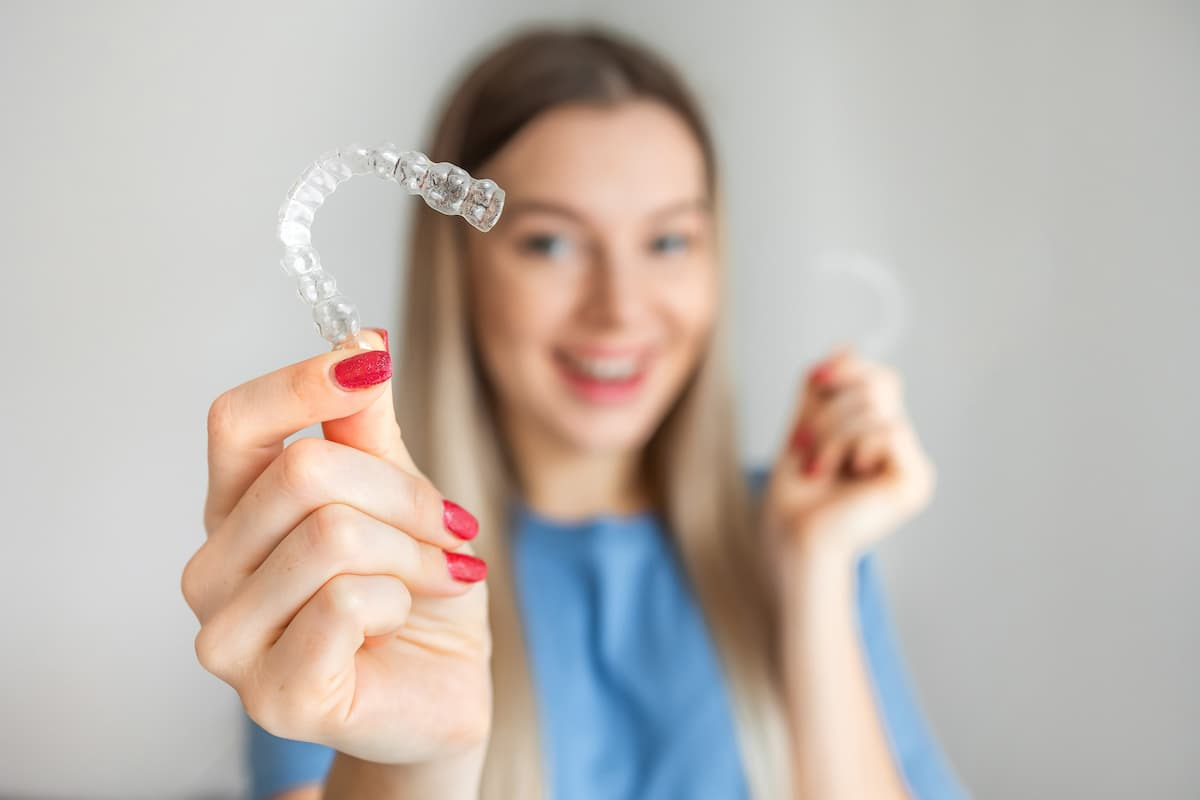
Invisalign is a branded orthodontic system that uses a series of custom-made, removable clear aligners to move teeth gradually into a more desired position. Unlike fixed metal braces, the aligners are made from smooth, transparent plastic and are designed to fit closely over the teeth. Treatment is planned and supervised by a trained dental professional, with each set of aligners replaced at intervals to continue the progression of tooth movement.
What Is Invisalign?
Invisalign is a registered brand of clear aligner system developed by Align Technology. It is not a generic term for all clear aligners, though it is one of the most widely recognised systems available in the UK. The system uses a sequence of individually manufactured plastic trays — referred to as aligners — each slightly different from the last, to guide teeth incrementally towards the planned position.
The name has become familiar enough that many people use "Invisalign" to describe clear aligners in general. It is worth understanding, however, that Invisalign refers specifically to the Align Technology product range, which includes several treatment tiers designed for varying levels of orthodontic complexity.
Treatment is delivered by dental professionals who have completed specific Invisalign training. The clinical planning process involves digital scanning, three-dimensional modelling and a proposed tooth-movement sequence that the clinician reviews and adjusts before treatment begins.
What Does Invisalign Do to Your Teeth?
Invisalign works by applying consistent, controlled pressure to specific teeth over time, encouraging gradual tooth movement through the surrounding bone and soft tissue. Each aligner in the series is designed to bring the teeth slightly closer to the final planned position, with the next aligner continuing that progression.
The biological process underlying tooth movement with clear aligners is essentially the same as with traditional fixed braces. Sustained, gentle force encourages bone remodelling on either side of a moving tooth — bone is gradually resorbed in the direction of movement and laid down on the opposing side. This process takes time and cannot be safely accelerated beyond certain biological limits.
Depending on the clinical situation, Invisalign treatment may also involve:
- Attachments — small tooth-coloured composite shapes bonded to specific teeth to give the aligners something to grip against, enabling more precise or complex movements.
- Interproximal reduction (IPR) — a carefully controlled, minor reduction of tooth enamel between adjacent teeth to create small amounts of space where needed.
- Elastics — small rubber bands attached between upper and lower aligners in some cases to help address certain bite discrepancies.
These additional elements are determined by the treating clinician based on the individual's dental assessment and treatment objectives.
How Does Invisalign Orthodontic Treatment Work?
Invisalign orthodontic treatment works by moving teeth through a planned series of aligners, each worn for a set period — commonly around one to two weeks — before progressing to the next in the sequence. The aligners are made from a proprietary thermoplastic material called SmartTrack, designed to fit closely against the teeth and exert the necessary forces as prescribed in the digital treatment plan.
The treatment process is planned using Invisalign's ClinCheck software, which generates a three-dimensional simulation of the anticipated tooth movements from start to finish. The treating clinician reviews this plan, makes adjustments where needed, and approves it before the aligners are manufactured. This digital planning process means treatment objectives are considered carefully before any physical aligners are produced.
Aligners are generally worn for the majority of each day and night — most clinicians advise around 20 to 22 hours daily — and are removed only for eating, drinking anything other than water, and oral hygiene routines. Compliance with this wearing schedule is considered important to the progress of treatment, as aligners that are not worn consistently may not achieve the planned movements within the expected timeframe.
Patients attend periodic review appointments with their Invisalign dentist throughout treatment to monitor progress, check aligner fit, perform any planned clinical steps such as IPR, and address any concerns.
What Is the Invisalign Process Step by Step?
The Invisalign process follows a broadly consistent sequence, though the specific steps and their duration will vary between patients depending on the complexity of treatment and individual clinical circumstances.
Initial Consultation and Dental Assessment
The process begins with an assessment by a qualified dental professional. This involves a review of dental and medical history, an examination of the teeth, gums and bite, and a discussion about the patient's concerns and objectives. The clinician will assess whether Invisalign treatment may be appropriate or whether other approaches might be more suitable.
Importantly, any pre-existing dental health issues — such as tooth decay, gum disease or missing teeth — will typically need to be addressed before orthodontic treatment can begin. Orthodontic treatment is generally not suitable when underlying dental health problems are unresolved.
Digital Records and Treatment Planning
If the initial assessment suggests Invisalign may be appropriate, digital records are taken. This usually involves intraoral scanning — a process in which a small wand is moved around the mouth to capture a precise three-dimensional digital model of the teeth. Some practices may still use physical impressions in certain circumstances.
Photographs and sometimes radiographs (X-rays) are also taken to support thorough treatment planning. These records are used to create the ClinCheck digital plan, which the clinician then reviews and refines before approving the aligner series for manufacture.
Aligner Manufacture and Fitting
Once the treatment plan is approved, the custom aligners are manufactured and delivered to the dental practice. At the fitting appointment, the clinician may place any planned attachments, carry out any initial IPR if indicated, and issue the first set of aligners. The patient is shown how to fit and remove the aligners correctly and given instructions about wear and care.
Wearing Aligners and Attending Reviews
The patient wears each set of aligners for the prescribed period before moving to the next. Regular review appointments — typically every six to ten weeks, though this varies — allow the clinician to monitor progress, check that the teeth are tracking as planned, perform any further clinical steps, and address any concerns. If teeth are not moving as expected, the clinician may recommend refinements.
Refinements
In some cases, additional aligners — known as refinements — may be required partway through or at the end of the initial series. These are planned if the teeth have not moved entirely as intended, or if further adjustments are needed to achieve the clinical objectives. The need for refinements is not uncommon and is a normal part of Invisalign treatment planning.
Retention
Once active aligner treatment is complete, the patient moves into the retention phase. Retainers are provided to help maintain the new tooth position, as teeth have a natural tendency to shift back towards their original positions after orthodontic treatment — a phenomenon known as relapse. Retainers may be removable, fixed, or a combination of both, depending on clinical judgement and patient preference.
Who May Be Suitable for Invisalign Treatment?
Invisalign may be suitable for a range of adults and older teenagers presenting with mild to moderate orthodontic concerns, though suitability depends on individual dental health, tooth position, bite characteristics and treatment objectives. Not everyone who wants Invisalign will be a suitable candidate, and a thorough clinical assessment is necessary before any conclusions can be drawn.
Factors that a clinician will typically consider include:
- The nature and severity of the tooth or bite issue
- The health of the teeth and surrounding gum and bone structures
- Whether any existing dental work — such as crowns, bridges or implants — may affect treatment
- The patient's ability to comply with the wearing requirements
- Whether any teeth are missing or significantly out of position in ways that may limit clear aligner effectiveness
Invisalign has expanded considerably in its clinical scope over the years and can now address cases that were previously considered too complex for clear aligners. However, there remain situations where fixed braces or other approaches may be more appropriate, and a qualified clinician is best placed to make that assessment.
What Dental Problems Can Invisalign Help Address?
Invisalign is designed to address a range of common tooth and bite alignment concerns. The system is not suitable for every orthodontic problem, and what it can achieve in a given patient's case depends on the clinical specifics.
Dental concerns that Invisalign may help address include:
- Crowding — where there is insufficient space in the arch for teeth to sit in alignment
- Spacing — gaps between teeth, including those caused by missing teeth in some circumstances
- Overbite — where the upper front teeth overlap the lower front teeth more than is typical
- Underbite — where the lower teeth sit in front of the upper teeth
- Crossbite — where some upper teeth sit inside the lower teeth
- Open bite — where the upper and lower front teeth do not meet when the back teeth are together
The suitability of Invisalign for any particular dental concern must be assessed by a qualified clinician. Some complex bite issues may be better managed with fixed appliances or through a combination of orthodontic and other dental treatments.
Are Invisalign Aligners Comfortable to Wear?
Most patients find Invisalign aligners more comfortable than fixed metal braces, though this experience varies between individuals. The aligners are made from smooth plastic without the brackets and wires associated with fixed braces, which reduces the likelihood of soft tissue irritation inside the mouth.
It is common to experience some pressure or mild discomfort when a new set of aligners is first fitted, particularly during the first day or two. This sensation typically reflects the aligner beginning to apply the forces planned for that stage of treatment and usually settles over a short period.
Some patients find that the edges of aligners cause minor irritation initially, and in some cases the clinician may smooth any sharp areas. Speech may also be temporarily affected at the start of treatment as the tongue and lips adjust to the presence of the aligners, though most patients adapt within a short time.
Describing Invisalign as painless would not be accurate for everyone. Any concerns about discomfort should be raised with the treating clinician.
How Long Does Invisalign Treatment Usually Take?
Treatment duration with Invisalign varies considerably between patients and depends primarily on the nature and complexity of the orthodontic concern being addressed, as well as how consistently the aligners are worn. It is not possible to give a universally accurate timeframe without a clinical assessment.
As a broad indication, some straightforward cases involving minor tooth movements may be completed in a matter of months, while more involved cases addressing significant crowding, spacing or bite correction may take considerably longer — sometimes approaching or exceeding two years.
The treating clinician will provide an estimated treatment duration based on the digital plan, though this remains an estimate. Progress can be influenced by biological variation in how teeth respond to forces, compliance with the wearing schedule and whether refinements are needed.
Invisalign vs Traditional Braces: What Are the Differences?
Invisalign and traditional fixed braces are both clinically validated orthodontic approaches, each with distinct characteristics. The most appropriate option for a given patient depends on their individual clinical situation, preferences and lifestyle considerations.
| Feature | Invisalign Clear Aligners | Traditional Fixed Braces |
|---|---|---|
| Appearance | Near-invisible when worn | Visible brackets and wires |
| Removability | Removable for eating and cleaning | Fixed throughout treatment |
| Eating restrictions | Aligners removed to eat; no food restrictions | Some foods should be avoided |
| Oral hygiene | Easier to maintain; aligners removed to clean | Requires more careful technique around brackets |
| Compliance | Requires consistent wearing discipline | Compliance largely managed by the appliance |
| Clinical suitability | Broad but not universal | Suitable for a wide range of cases including complex ones |
| Review frequency | Typically less frequent monitoring visits | Usually requires more frequent adjustments |
| Comfort | Generally smooth; pressure on new aligners | Initial irritation common; wire adjustments may cause discomfort |
Are Invisalign Aligners the Best Clear Braces for Adults?
Invisalign is one of the most established and extensively used clear aligner systems available, and it benefits from a large body of clinical experience and research compared to some newer or less well-known alternatives. That said, declaring it universally the best option for all adults considering clear or invisible braces would not be accurate or clinically responsible.
A range of clear aligner systems are available in the UK, produced by different manufacturers, with varying levels of clinical evidence, material quality, treatment planning processes and practitioner support. The decision about which system is most appropriate should be guided by the clinician's professional assessment of the patient's individual needs.
For adults considering orthodontic treatment who wish to avoid visible fixed braces, clear aligner treatment — including Invisalign — may offer a clinically suitable and aesthetically discreet option in appropriate cases. What matters most is that treatment is planned and supervised by a qualified dental professional who can select the most appropriate approach for the individual.
How Much Does Invisalign Cost in the UK?
Invisalign costs in the UK vary according to several factors, including the complexity of the case, the number of aligners required, the experience and location of the treating clinician, and what is included within the treatment package.
Costs are generally influenced by:
- Case complexity — more involved cases requiring more aligners and clinical steps typically cost more
- Treatment tier — Invisalign offers different product tiers (such as Invisalign Lite, Invisalign Moderate and Invisalign Comprehensive) for varying levels of treatment scope
- Provider location — practices in central London and other major cities often reflect local overhead costs
- What is included — some packages include retainers, whitening and follow-up care; others do not
It is not appropriate to quote specific figures here, as prices vary considerably between practices and change over time. When seeking a quotation, it is advisable to understand clearly what is — and is not — included, whether refinements are covered, and what the retention arrangements are.
Wimpole Dental Office provides transparent treatment information, and you can review our fee guide for a clearer indication of what to expect when planning treatment.
Is Cheap Invisalign Always a Good Choice?
It is understandable that cost is a significant factor for many people considering orthodontic treatment. However, choosing Invisalign on the basis of price alone carries risks that are worth considering carefully.
Orthodontic treatment involves clinical assessment, digital planning, professional supervision and ongoing monitoring. When these steps are reduced or removed in the interest of lowering costs — as can happen with some heavily discounted or remotely supervised clear aligner services — the quality of clinical oversight may be compromised.
Potential concerns with very low-cost or remote aligner services include:
- Inadequate assessment of dental health before treatment begins
- Lack of physical examination to identify contraindications
- Minimal or no professional monitoring during treatment
- No capacity to respond to complications if they arise
- Retainers and refinements not included, leading to unexpected additional costs
The General Dental Council (GDC) has raised concerns about certain direct-to-consumer aligner services that do not involve adequate in-person clinical assessment. Patients are encouraged to ensure their treatment is delivered and supervised by a GDC-registered dental professional.
A lower headline price does not always represent better value when the total cost of care — including any additional steps required and the importance of clinical safety — is taken into account. A consultation with a qualified Invisalign dentist will allow you to understand what treatment genuinely involves in your particular case.
What Should You Expect After Invisalign Treatment?
Once active treatment is complete, most patients move into a retention phase designed to help maintain the results achieved. Without appropriate retention, teeth may gradually shift back towards their original positions over time — this is a normal biological tendency following orthodontic treatment and is not unique to clear aligners.
Retainers may be:
- Removable retainers — custom-made clear or Hawley-style retainers worn according to the clinician's instructions, often nightly for the long term
- Fixed retainers — a thin wire bonded to the back surfaces of the front teeth, providing continuous retention without reliance on patient compliance
- A combination of both approaches
The clinician will advise on the most appropriate retention arrangement based on individual circumstances. It is important to follow retention instructions carefully, as the investment made in treatment can be compromised if retention is neglected.
Some patients also choose to have tooth whitening after completing Invisalign treatment, as the teeth are in their new position and aligners can be used as whitening trays in some circumstances. This should be discussed with the treating clinician.
How Do You Maintain Your Results After Treatment?
Maintaining the results of Invisalign treatment over the long term involves a combination of consistent retainer wear, good oral hygiene and regular dental check-ups. Treatment achieves the tooth position; retention and ongoing dental care help preserve it.
Key steps include:
- Wearing retainers as instructed by the treating clinician
- Attending regular dental examinations and hygiene appointments
- Monitoring fixed retainers for any signs of breakage or lifting
- Replacing removable retainers when they wear out or no longer fit correctly
- Maintaining good brushing and interdental cleaning habits
Patients should not assume that the results of orthodontic treatment are automatically permanent. Teeth can continue to change position throughout adult life, and lifelong retention is often recommended in some form.
Questions to Ask an Invisalign Dentist Before Starting Treatment
Before committing to Invisalign orthodontic treatment, it is worth preparing a list of questions to discuss at your consultation. A knowledgeable clinician will welcome these conversations and provide clear, honest answers.
Consider asking:
- Am I a suitable candidate for Invisalign, and why?
- What specific concerns would this treatment address in my case?
- Will I need attachments, IPR or any other additional steps?
- How many aligners am I likely to need and what is the estimated treatment duration?
- What is included in the treatment fee — refinements, retainers and follow-up appointments?
- How often will I need to attend for review appointments?
- What happens if the teeth are not tracking as expected?
- What retention is recommended after treatment, and what does it involve?
- Are there any aspects of my dental health that need to be addressed before we start?
- What are the realistic limitations of this treatment in my specific case?
A thorough consultation at our Invisalign London service will give you the opportunity to discuss all of these questions with a qualified clinician before making any decisions about treatment.
Frequently Asked Questions
What is Invisalign and how does it work?
Invisalign is a branded clear aligner system that uses a series of custom-made, removable plastic trays to move teeth gradually into a planned position. Each aligner in the series is slightly different, applying controlled pressure to specific teeth to encourage progressive movement. Treatment is planned digitally and supervised by a trained dental professional throughout.
What does Invisalign actually do to your teeth?
Invisalign applies gentle, sustained pressure to teeth, encouraging them to move incrementally through the surrounding bone over time. This process — the same biological mechanism used in all orthodontic treatment — involves bone remodelling around the roots of moving teeth. The aligner series is designed so that each step builds on the last, moving teeth towards the clinically planned final position.
Is Invisalign suitable for adults?
Invisalign is widely used by adults and may be suitable for a broad range of adult patients with mild to moderate orthodontic concerns. Suitability depends on individual dental health, the nature of the alignment or bite issue, and clinical assessment by a qualified professional. It is not automatically suitable for everyone, and a consultation is necessary to determine whether it is appropriate for a specific individual.
How many hours a day should Invisalign be worn?
Most clinicians advise wearing Invisalign aligners for approximately 20 to 22 hours each day. Aligners are generally removed only for eating, drinking anything other than water, and cleaning the teeth. Consistent compliance with the wearing schedule is considered important to achieving treatment progress within the expected timeframe.
Is Invisalign painful?
Invisalign is not typically described as painful, though many patients experience some pressure or mild discomfort when first fitting a new set of aligners. This usually settles within a day or two. Describing the treatment as entirely painless would not be accurate for everyone. Any persistent or significant discomfort should be discussed with the treating clinician.
How long does Invisalign treatment take?
Treatment duration varies considerably depending on the complexity of the individual case and how consistently aligners are worn. Some straightforward cases may be completed in a relatively short period, while more complex treatment can take significantly longer. The treating clinician will provide an estimated duration based on the digital treatment plan, though this is an estimate rather than a guarantee.
Is Invisalign cheaper than traditional braces?
Not necessarily. The cost of Invisalign relative to fixed braces depends on the specific case, the treatment tier used and the practice providing care. In some cases Invisalign may cost more than fixed braces; in others the costs may be comparable. It is advisable to obtain a full, itemised quotation and understand exactly what is included before making a comparison.
Can Invisalign correct all orthodontic problems?
No. While the clinical scope of Invisalign has expanded considerably, it is not suitable for every orthodontic concern. Certain complex bite issues, significant skeletal discrepancies or cases involving very specific tooth movements may be better managed with fixed braces or other approaches. A qualified clinician is best placed to advise on what is achievable in an individual's particular circumstances.
Do you need to wear retainers after Invisalign?
Yes. Retention is a standard and important part of orthodontic treatment. After active aligner treatment is complete, teeth have a natural tendency to shift back towards their previous positions without ongoing support. Retainers — either removable, fixed or a combination — are typically prescribed to help maintain the new tooth position. The clinician will advise on what retention is appropriate for the individual case.
How do I choose an Invisalign dentist?
Look for a GDC-registered dental professional who has completed Invisalign training and can provide evidence of experience with the system. It is worth asking about the clinician's level of Invisalign provider status, which reflects the volume of cases they have treated. A thorough initial consultation, clear communication about what treatment involves and transparent information about costs and what is included are all reasonable things to expect. You can explore our Invisalign London treatment page or contact us to arrange an assessment.
Internal Links Used in This Article
External References and Sources
- General Dental Council (GDC) — Standards for the Dental Team — professional standards underpinning clinical communication and patient care.
- NHS — Braces and orthodontics — overview of orthodontic treatment types and what to expect.
- Align Technology — Invisalign professional information — product-specific information about the Invisalign system and treatment tiers (manufacturer source).
- Cochrane Review — Orthodontic treatment for crowded teeth in children and adults — independent review resource for evidence on orthodontic treatment outcomes.
- ASA/CAP UK — Advertising rules for health and medical products — advertising standards applicable to dental and healthcare marketing in the UK.
Please note: External sources should be verified at the time of publication to confirm they remain accessible and accurately support the statements attributed to them.
Schema Recommendations
The following structured data types are recommended for this article:
- Article or BlogPosting — appropriate for the main article content, including title, author, date published and publisher details.
- BreadcrumbList — to reflect the site navigation path (e.g., Home > News & Blog > What Is Invisalign?), supporting both search engine indexing and user orientation.
- FAQPage — suitable for the FAQ section, subject to confirmation that implementation meets current Google structured data guidelines and eligibility criteria. Each FAQ entry should correspond to a genuine question-and-answer pair as written in the article, without modification for schema purposes.
Raw JSON-LD has not been included here. Implementation should be carried out by a qualified developer in accordance with current Google Search Central structured data documentation.
Image Details
Image URL: `https://res.cloudinary.com/dzsbm6dxa/image/upload/v1784705024/Invisalign-Cost-and-Pricing-UK-Complete-Guide-to-Fees_-Finance-_-Value_deo5nd.jpg`
Suggested alt text: `Illustration representing Invisalign clear aligner treatment costs and pricing considerations in the UK`
The image has been placed at the top of the article body. It should not be presented as representing an actual patient result. The alt text should be reviewed by the publishing team to ensure accuracy against the actual visual content of the image.
Clinical Disclaimer
> The information in this article is intended for general educational purposes only. It does not constitute clinical advice and should not be used as a substitute for an individual dental assessment. Invisalign suitability, treatment planning and clinical decision-making should always be discussed with a GDC-registered dental professional who can assess your specific circumstances. Treatment outcomes vary between individuals and cannot be guaranteed.
Publication and Review Dates
- Date Published: 2026-11-19
- Last Clinically Reviewed: [To be completed when a qualified clinical reviewer has reviewed the article — do not publish a review date that has not occurred]
- Next Review Date: [To be set 12 months after the confirmed clinical review date]
Quality Control Summary
Completed checks and status:
| Check | Status | Notes |
|---|---|---|
| Primary keyword used naturally in H1, opening paragraph and relevant H2s | ✅ | No keyword stuffing identified |
| Secondary keywords integrated without repetition | ✅ | All secondary terms addressed contextually |
| Clinical claims qualified appropriately with "may", "can", "often", "depending on" | ✅ | No guarantees or outcome promises present |
| GDC, ASA and CQC compliance reviewed | ✅ | No misleading claims, fabricated statistics or pressure language |
| Internal links from approved WDO URL list only | ✅ | 5 unique approved URLs used; each used once |
| No invented, modified or unverified URLs included | ✅ | Confirmed |
| Every H2 begins with a 40–60-word direct answer paragraph | ✅ | Reviewed across all sections |
| FAQs are non-repetitive and add useful detail | ✅ | 10 questions included; content adds clarity beyond main body |
| External sources cited are plausible and contextually appropriate | ⚠️ | Sources should be individually verified by the publishing team at the time of publication to confirm accessibility and relevance |
| Image alt text is descriptive and accurate | ⚠️ | Alt text should be confirmed against the actual image content by the publishing team |
| Clinical review date | ⚠️ | Left as a placeholder; must not be completed without a genuine clinical review |
| Specific Invisalign costs not stated | ✅ | Directed to fee guide; no figures invented |
| No fabricated reviewer credentials or clinical statistics | ✅ | Confirmed |
| Invisalign described as a brand, not a generic term | ✅ | Addressed explicitly in the first section |
| British English throughout | ✅ | Reviewed |
Limitations and items requiring attention before publication:
- The external sources listed (particularly the Cochrane Library reference) should be verified by the editorial team to ensure a suitable and specific review exists that supports the content attributed to it.
- The featured image alt text should be confirmed against the actual visual content of the image before publication.
- A genuine clinical review date should only be added after a GDC-registered clinician has reviewed the article for clinical accuracy. The placeholder must not be replaced with an invented date.
- The URL slug `/news-blog/what-is-invisalign` should be verified as available in the CMS before publication, as instructed in the brief.
- The fee guide link should be checked to confirm it remains live and directs users to current, accurate pricing information.

 Great dentist had my first appointment/consultation today for tooth enlightening! Really informative, patient DR who has a genuine intrest in your teeth and Keeping the cost low! :)


